Finance in Costa Rica
Plan your financial future in your new country. Stay informed, project ahead, and make secure decisions.

On This Page

Finance in Costa Rica for Expats: Complete 2026 Guide
For foreigners moving to Costa Rica, whether to the GAM, Puntarenas, Limón or Guanacaste, understanding the banking system, remittances and credit is crucial for a successful financial transition.
- Costa Rica has a dual-currency economy: most transactions are in colones (₡), but USD is widely accepted.
- Both state and private banks operate under strict SUGEF supervision.
- Costa Rica uses a territorial tax system, foreign-source income is generally not taxed locally.
- Foreigners have the same property and investment rights as Costa Rican nationals.

Costa Rica in Figures 2025
Official INEC compendium of Costa Rica's main social, demographic, economic, and environmental indicators.
Download free brochure PDFSource: Instituto Nacional de Estadísticas y Censos (INEC)
Banking in Costa Rica for Expats
Costa Rica's banking sector is divided into state-owned and private banks. Both operate under SUGEF supervision.
State-Owned Banks
State banks offer unlimited deposit guarantees backed by the government.
- Banco Nacional de Costa Rica (BNCR), largest branch network nationwide.
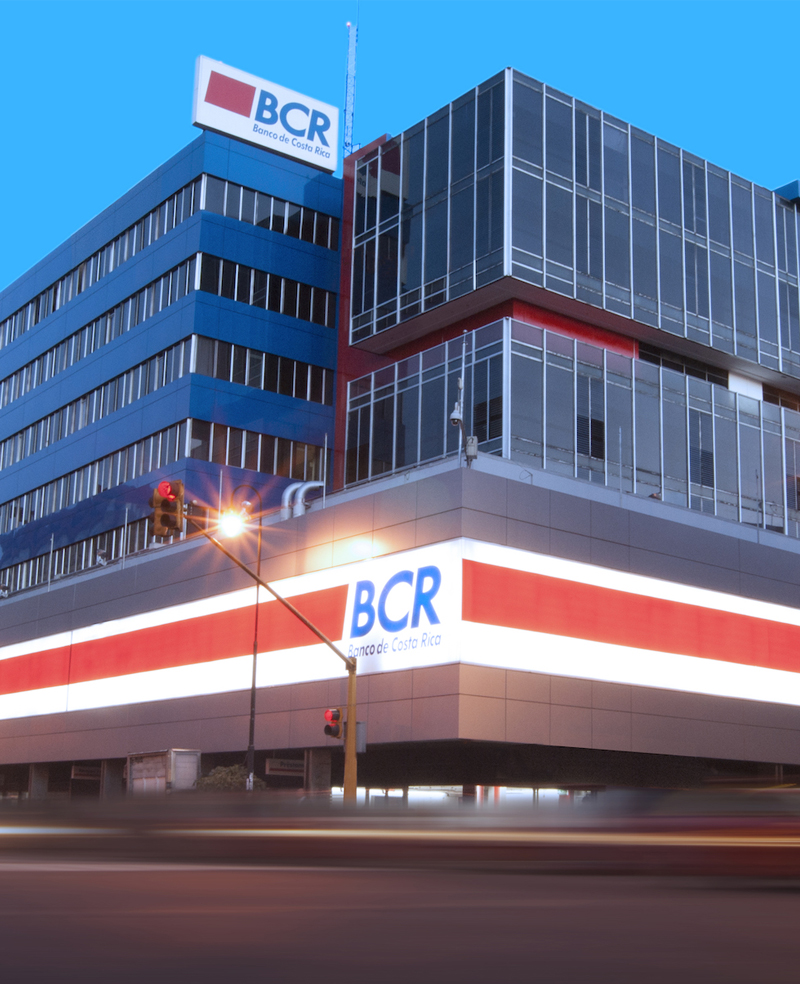
- Banco de Costa Rica (BCR), strong commercial and personal banking services.
- Banco Popular y de Desarrollo Comunal, focuses on workers and cooperatives.
- BANHVI, specialized in housing finance.
- Banco Crédito Agrícola de Cartago, agricultural and regional focus.
Private Banks
Private banks often have more flexible processes for foreigners and offer international and digital banking.
- BAC Credomatic, most international-friendly; USD accounts and credit cards for new residents.
- Scotiabank, Davivienda, Promérica, Lafise, regional banks with broad service offerings.
- Banco BCT, Banco General, Cathay, CMB, Prival Bank, specialized institutions.
To open a bank account you typically need: valid passport, DIMEX or entry stamp, proof of address, and proof of income source. Private banks are generally more accessible for new arrivals.
Sending Money to Costa Rica: SINPE & Wire Transfers
Sending and receiving money internationally is a key activity for expats. Costa Rica offers options from modern online platforms to traditional wire transfers and the popular local SINPE Móvil system.
Online Platforms
- Wise (formerly TransferWise), best exchange rates, low fees, fast. Most recommended for regular transfers.
- Remitly, popular for USD to CRC transfers from the US. Multiple speed options.
- PayPal, widely accepted for online business. Currency conversion fees apply.
- Kash, local app for transfers between different Costa Rican banks using just a username.
SINPE Móvil, National Transfer System
SINPE Móvil is Costa Rica's real-time national transfer system. Any person with a local bank account can send and receive money instantly using just a phone number, free of charge.
Traditional Services
- Western Union / MoneyGram, available at pharmacies, supermarkets, and bank branches. Higher fees but accessible everywhere.
- International Wire Transfer (SWIFT), bank-to-bank. Reliable but slow (2–5 business days) and more expensive.
Large cash amounts over ~$10,000 USD must be declared to customs. Banks apply strict AML checks, be ready to document the source of funds for large transfers.


Costa Rica Taxes for Foreigners 2026
Costa Rica operates a territorial tax system: only income generated within Costa Rica is taxed locally, a major advantage for most expats.
Income Tax
- Costa Rican-source income: progressive rates from 0% to 25%.
- Foreign-source income: generally NOT taxed in Costa Rica. Foreign pensions, dividends, and remittances are typically exempt.
- Capital Gains Tax: 15% on gains from the sale of assets held in Costa Rica. Exemptions may apply.
Other Key Taxes
- VAT (IVA): 13% general rate on goods and services.
- Real Estate Tax: ~0.25% annually on registered property value. Paid to the municipality.
- Property Transfer Tax: 1.5% of the declared value. Typically split 50/50 between buyer and seller.
- Vehicle Tax (Marchamo): annual circulation permit based on vehicle value.
- Solidarity Tax: applies to luxury homes over ~¢133M colones. See the Housing page for full details.
Filing Your Tax Return: Form D-140
If you earn Costa Rican-source income, you must file an annual income tax return using Form D-140 through the Ministerio de Hacienda's ATV portal. Deadline: March 15. Self-employed individuals and S.A. owners must file annually. Pensionados and rentistas with only foreign-source income typically have no local filing obligation.
Capital Gains in Practice
- The 15% capital gains tax applies to profits from the sale of real estate, Costa Rican company shares, and other assets held in Costa Rica.
- Habitual sellers (developers, frequent flippers) pay regular income tax rates (0–25%) instead of the flat 15%.
- Exempt: gains on assets outside Costa Rica, personal use vehicles, and certain primary residence sales under specific conditions.
US Expat Obligations: FBAR & FATCA
US citizens living in Costa Rica remain subject to US federal taxes on worldwide income. Two key reporting requirements apply:
- FBAR (FinCEN Form 114): Required if your Costa Rican bank accounts exceed $10,000 USD at any point during the year. Filed separately with the US Treasury. Deadline: April 15 (auto-extension to Oct 15). Non-filing penalties are severe.
- FATCA (Form 8938): Required if total foreign financial assets exceed $200,000 (single, living abroad) at year-end. Filed with your IRS return. Costa Rica shares account data with the IRS under the bilateral FATCA agreement.
- Foreign Earned Income Exclusion (Form 2555): May exclude up to $126,500 (2024 limit) of Costa Rican wages or self-employment income from US taxable income. Does NOT apply to pensions or dividends.
Costa Rica has double taxation agreements with some countries. Always consult a local CPA or tax attorney, especially if you have income or assets in multiple countries. US expats should work with a dual-country specialist familiar with both IRS rules and Hacienda regulations.
Credit for Foreigners
Accessing credit in Costa Rica as a foreigner is possible but requires building a local financial profile. Your home country credit history is not recognized here, you start from zero.
Credit Options by Type
- Credit Cards: Residents with DIMEX have the best chance. Start with a low-limit card linked to your bank account.
- Personal Loans: Available to residents with verifiable income in colones. May require a cosigner or collateral.
- Vehicle Loans: Accessible for residents who can demonstrate repayment capacity.
- Mortgage Loans: Possible but complex. Typically requires a larger down payment (30–40%). Non-residents face very strict requirements.
How to Build Local Credit History
- Open and actively use a Costa Rican bank account.
- Pay utility bills on time (electricity, water, internet).
- Apply for a low-limit credit card or store financing card.
- Consider using a cosigner (fiador) for your first credit products.
- Be patient, building solid local credit takes 1–2 years of consistent behavior.
Costa Rica's credit bureaus are consulted by all banks. A negative entry can block credit access for years. Always pay on time from day one.


Local Currency & Tips
The official currency is the Costa Rican Colón (₡). USD is widely accepted in tourist areas, restaurants, hotels, and commercial zones.
Denominations
- Banknotes: ₡1,000 / ₡2,000 / ₡5,000 / ₡10,000 / ₡20,000 / ₡50,000
- Coins: ₡5 / ₡10 / ₡25 / ₡50 / ₡100 / ₡500
Exchange Rate
The colón operates under a managed float regime: the exchange rate fluctuates daily, with the BCCR occasionally intervening. Monitor rates at bccr.fi.cr.
Current Situation (May 2026)
The US dollar has experienced a sustained downward trend against the colón. As of May 2026, the BCCR reference rate stands at approximately ₡456, with an annual variation of –10.29%.
- BCCR reference rate: ~₡455.99 (May 11). Minimum of ₡453.59 on May 1, the weakest since 2015.
- Bank window rates: ₡444–₡463, with spreads of ₡12–₡24.
- December 2025 low: ₡492.48 after seven consecutive days of decline, lowest in 17 years.
- February 2026 (CICR): ~₡471, with negative inflation in Q1.
Why the colón is strong
- Record medical device exports driving strong demand for colones.
- High tourism season: foreign visitors increase the supply of dollars locally.
- Transnational year-end bonuses in dollars increase USD liquidity.
- High colón liquidity in the local financial system.
- Robust international reserves held by the BCCR.
- Global depreciation of the US dollar.
A strong colón benefits importers and dollar-debtors, but hurts exporters, tourism businesses, and remittance recipients. Expats on USD income have seen purchasing power decline.
Tips for Foreigners
- Avoid unofficial money exchange (cambistas). Use banks, ATMs, or authorized exchange houses only.
- Most ATMs dispense both colones and USD. Check your bank's foreign transaction fees before withdrawing.
- When paying in USD, change is typically given in colones at the store's internal rate.
- For large amounts, timing your exchange during favorable rates can generate meaningful savings.
- If you receive income in USD, consider a colón-denominated budget to reflect current exchange rate reality.
Investment Opportunities in Costa Rica
Costa Rica offers a stable, investment-friendly environment with solid legal protections for foreign investors.
Top Investment Opportunities
- Real Estate: Consistent appreciation, strong rental demand, and foreigner-friendly ownership laws.
- Tourism: Boutique hotels, eco-lodges, vacation rentals, and adventure tourism. Over 3M tourists annually.
- Renewable Energy: Solar, wind, hydroelectric, and biomass. Costa Rica generates 99%+ of electricity from renewables.
- Agriculture & Agribusiness: Organic crops, specialty coffee, non-traditional exports, and food processing.
- Technology & Services: Growing tech ecosystem, software development, and BPO/outsourcing.
Key Steps for Foreign Investors
- Define your objectives, return timeline, risk tolerance, active vs. passive management.
- Due diligence: market analysis, legal/regulatory review, and financial projections.
- Hire a professional team: local attorney, CPA, and investment advisor.
- Choose the right legal structure: S.A. (Sociedad Anónima) is the most common vehicle for investments.
Be cautious with off-plan real estate or startup investments without proper due diligence. Always verify through official registries and use independent legal counsel.


Insurance Options for Expats in Costa Rica
Costa Rica's insurance market opened to private competition in 2008. Today, expats can choose from local and international insurers.
Health Insurance
- CCSS (Caja): Mandatory once residency is approved. Low monthly contribution. Covers all public hospitals and clinics.
- Private Health Insurance: INS, Blue Cross Blue Shield, Mapfre, and others offer supplemental plans for faster private care.
Property Insurance
- Homeowner's insurance: covers the structure against fire, earthquakes, and natural disasters. Essential given Costa Rica's seismic activity.
- Tenant's insurance: covers personal belongings if renting. Not required but strongly recommended.
Vehicle Insurance
- Third-party liability: mandatory by law, included in the annual marchamo.
- Comprehensive coverage: optional but strongly recommended. Available through INS and private insurers.
Other Insurance Types
Life Insurance, Personal Accident, Travel Insurance, Business Insurance, and Pet Insurance.
Financial Regulations for Foreigners in Costa Rica
Costa Rica has a well-developed financial regulatory framework. Understanding these regulations helps you avoid penalties and maintain a clean financial standing.
Key Regulations
- Cash Declaration: Amounts over ~$10,000 USD must be declared to customs upon entering Costa Rica.
- FATCA & CRS: Costa Rica has tax information exchange agreements with the US (FATCA) and OECD countries (CRS). Your local accounts may be reported to your home country.
- AML/KYC Compliance: Banks strictly apply Know Your Customer rules. Be prepared to document the source of funds for large transactions.
- Maritime Zone Restrictions: Special limitations apply to foreign ownership of coastal concession properties.
- Capital Repatriation: Generally no restrictions on transferring funds out of Costa Rica.
- Consumer Protection (SUGEF): SUGEF protects all financial consumers, including foreigners, in disputes with banks.
In 2026, a new Bank Fraud Law makes banks responsible for unauthorized electronic transactions. You have 30 days to report fraud; the bank has 30 days to investigate. Does NOT cover credit card fraud, only bank accounts, debit cards, and SINPE transfers.


Moving Household Goods to Costa Rica
Relocating personal belongings (menaje de casa) is a significant step. Understanding the customs process, requirements, and costs can save you time and unexpected expenses.
Tax Exemption Conditions
- You must have lived abroad for at least 6 consecutive months before your move.
- Goods must be used household items for personal use, new items are subject to import taxes.
- No commercial quantities, customs evaluates the reasonableness of amounts.
- Goods imported with exemption cannot be sold for a specific period after importation.
Customs Process (Key Steps)
- Hire an authorized Costa Rican customs broker (agente aduanero), mandatory by law.
- Submit the Single Customs Declaration (DUA) with your detailed household goods list.
- Customs may conduct a physical inspection of your shipment.
- Once approved, pay applicable charges and collect your goods.
Required Documents
- Valid passport (copy of all pages)
- Proof of residence abroad for at least 6 months
- Detailed household goods list, signed on every page by the importer
- Original Bill of Lading (maritime) or Air Waybill (air cargo)
- Sworn declaration that goods are used personal household items
- Power of attorney for the customs broker
Begin customs procedures immediately upon arrival to avoid high storage fees. Ports of entry: Limón (Atlantic), Caldera (Pacific), Juan Santamaría Airport (air cargo).
Shipping Options for Your Move
The right shipping method depends on your volume, budget, timeline, and service level needed.
Maritime Transport (Most Common)
- Full Container Load (FCL): 20-ft or 40-ft container. Best for large households.
- LCL / Groupage: Share a container. More economical for smaller volumes, but longer transit times.
- Transit time: 2–6 weeks. Ports: Limón (Atlantic) or Caldera (Pacific).
Air Transport (Faster, More Expensive)
- Transit time: 3–7 days. Significantly higher cost than maritime.
- Best for high-value items, small volumes, or time-sensitive shipments.
- Less risk of damage. Strict restrictions on item types (no flammables, batteries, etc.).
Is It Worth Bringing Your Household Goods?
- YES if: high sentimental or monetary value, or specialized items hard to find in Costa Rica.
- MAYBE NOT if: shipping cost exceeds local replacement cost, or items are common and affordable locally.
Start the conversation with a customs broker before you pack. Their guidance on what to declare and how to list items can save you significant money and delays at the port.