Transportation in Costa Rica
Your complete guide to buses, taxis, domestic flights, driving laws, and getting around as an expat living in Costa Rica.

On This Page
Quick Guide to Transportation in Costa Rica
Everything a foreigner needs to know about getting around Costa Rica, buses, taxis, ferries, flights & more.
Ground Transportation
The most common way to explore Costa Rica, buses, taxis, trains, rentals, shuttles & ride-apps.
The most economical and common option for travel.
- DescriptionExtensive network connecting most cities, towns, and even rural areas.
- TypesUrban (within cities) and intercity (between destinations).
- PaymentCash accepted. SINPE-TP (card/phone) works on most GAM routes and is expanding nationwide.
- TipsSchedules can be flexible. Ask locals for directions, route signage can be limited.
Readily available in urban and tourist areas.
- TypesOfficial red taxis with a taximeter, and informal taxis (use with caution).
- Key TipAlways insist on the taximeter being used. Verify the driver's ID for safety.
Passenger train service in the Greater Metropolitan Area (GAM).
- CoverageConnects San José with nearby cities, useful alternative to avoid traffic.
- PaymentPrimarily SINPE-TP (contactless card/phone) since 2025. Cash also accepted at stations.
- NoteSpecific routes and schedules, check INCOFER's site for current timetables.
Independence and freedom to explore at your own pace.
- RequirementsValid driver's license, credit card, and minimum age requirement.
- Road TipA 4x4 is recommended for rural areas. Use Waze for navigation, it's essential.
Convenient door-to-door transport between hotels and tourist destinations.
- TypesShared (more economical) or private (greater flexibility).
- Key TipBook in advance, especially during high season.
Available mainly in the GAM and key tourist areas.
- PricingFares are pre-set in the app. On inDrive, you can negotiate the fare directly.
- SafetyAlways verify the driver's ID and license plate before getting in.
Water Transportation
Ferries, water taxis, boat tours and cruises connecting islands, peninsulas, and coastal destinations.
- Main RoutePuntarenas → Nicoya Peninsula (Paquera & Naranjo terminals).
- TipCheck schedules in advance. Arrive early, especially with a vehicle.
- Common RoutesTortuguero (Caribbean coast), remote beaches on the Osa Peninsula.
- NotePrices can vary and are often negotiated. Safety is paramount.
- ActivitiesWhale & dolphin watching, snorkeling, diving, river tours.
- WherePacific and Caribbean coastal areas.
- TipChoose reputable tour operators with adequate safety measures.
- PortsLimón (Caribbean) and Puntarenas / Caldera (Pacific).
- NoteFor tourists on multi-destination cruises with limited time in port.
Air Transportation
International airports, domestic flights, and charter aviation across Costa Rica.
- AirportsJuan Santamaría (SJO) near San José · Daniel Oduber Quirós (LIR) in Liberia, Guanacaste.
- AirlinesWide variety of international airlines operate at both airports.
- AirlinesPrimarily Sansa Airlines and private charter services.
- DestinationsDrake Bay, Tortuguero, La Fortuna, Tamarindo, and more.
- AdvantagesSignificant time savings vs. ground transport.
- CautionMore expensive, stricter luggage limits, susceptible to weather delays.
- DescriptionPrivate flights and air taxis for personalized transfers.
- UsageExclusive tourism and airstrips not served by regular flights.
Alternative Transportation
Bikes, motorcycles, horses, and more, especially in rural and coastal areas.
Popular in flat coastal and rural areas. Some cities are developing cycling infrastructure.
Agile and economical. Widely used for commuting in urban areas and small towns.
Modified 4x4 vehicles used in mountainous rural areas with unpaved or poorly maintained roads.
Used in rural areas for tourism (horseback riding) and in some cases for personal or cargo transport in areas with difficult access.
Laws, Regulations & Tips
Essential knowledge for foreigners: driving licenses, road rules, safety, and payment methods.
- TouristsCan drive with a valid foreign license for up to 90 days.
- ResidentsMust obtain a Costa Rican driver's license after obtaining residency.
- DocumentsAlways carry your passport/DIMEX and license while driving.
- Drive SideRight-hand traffic (same as USA, most of Europe).
- SeatbeltsMandatory for all passengers. Child seats required for children under 12.
- Speed Limits60 km/h in cities · 80 km/h secondary roads · 100–120 km/h highways.
- AlcoholLegal limit: 0.5 g/L blood alcohol. DUI penalties are severe.
- Cell PhoneProhibited while driving unless using hands-free.
- At NightAvoid driving on unfamiliar rural roads at night, limited lighting and road hazards.
- ParkingUse guarded lots (parqueos) when possible. Do not leave valuables visible.
- Rain SeasonMay–Nov: roads can flood. Check conditions before long trips. 4x4 strongly recommended.
- What is it?Costa Rica's national contactless payment system for public transport.
- WhereBuses (most GAM routes), INCOFER train (fully since 2025), expanding nationally.
- HowTap your contactless debit/credit card or phone at the reader. Cash still accepted.
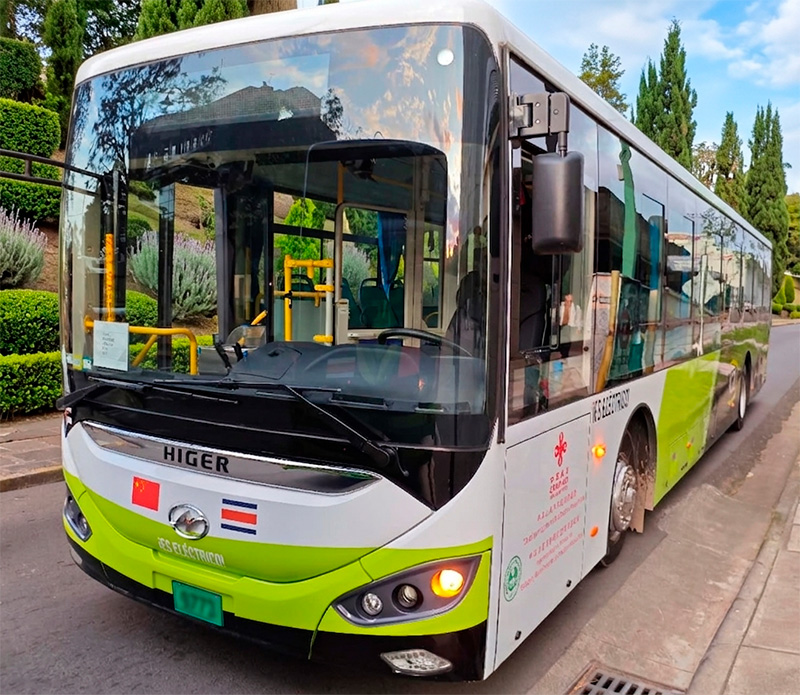
Ground Transportation
In Costa Rica, ground transportation is the most common way to get around and explore the country. It offers a variety of options, from public buses to private vehicles, connecting cities, towns, and rural areas.
Buses (Public and Private)
- Description: The bus network is extensive and connects most cities, towns, and even rural areas.
- Types: Urban (within cities) and intercity (between destinations).
- Payment: Cash accepted. SINPE-TP (card/phone) works on most GAM routes and is expanding nationwide.
Taxis
- Types: Official (red with a meter) and informal (use with caution).
- Considerations: Insist on the meter being used. For safety, verify the driver's identification.
Red = official taxi. If it's not red, negotiate the fare upfront and always verify ID before getting in.
Train (INCOFER)
- Description: Connects San José with nearby cities in the GAM, a useful alternative to avoid traffic.
- Payment: Primarily via SINPE-TP (fully implemented since 2025). Cash also accepted at stations.
Ride-Sharing Apps (Uber, DiDi, inDrive)
- Coverage: Primarily available in the GAM and key tourist areas.
- Tip: Fares are pre-set in the app (on inDrive, you can negotiate). Always verify driver ID before boarding.
For rural areas, a 4x4 rental is strongly recommended. Download Waze before driving, it's the most reliable navigation tool in Costa Rica.
Complete Guide to Bus Prices in Costa Rica: San José and Intermunicipal Routes by Zone
If you are planning to get around Costa Rica by bus, whether within the Greater Metropolitan Area or to other provinces, these are the prices you will find in 2026. ARESEP adjusted fares in February of this year, so most fares remain the same or with minimal variations of 5 to 25 colones.
| Route | Fare | Operator / Terminal |
|---|---|---|
| Central Zone: San José and the Valley | ||
| San José to Heredia (main highway) | ₡580 | TUASA, Station Wagon, Terminal 7-10 / Coca Cola |
| San José to Coronado | ₡435 | Local cooperatives |
| San José to Cartago | ₡670 | Terminal 7-10 / Atlántico Norte |
| San José to Alajuela | ₡735 | TUASA, Station Wagon |
| Central Pacific Zone: Puntarenas and Surroundings | ||
| San José to Puntarenas | ₡2,665 | Empresarios Unidos de Puntarenas, Terminal Pulmitan / Tralapa |
| San José to Orotina | ₡2,025 | Tracopa |
| San José to Golfito | ₡9,385 | Tracopa (direct, ~6 hours) |
| Caribbean Zone: Limón and the Atlantic Coast | ||
| San José to Limón (regular) | ₡3,000 | Buses Caribeños, Gran Terminal del Caribe (Av. 11) |
| San José to Limón (direct) | ₡4,000 | |
| San José to Guápiles | ₡2,000 | Buses Caribeños |
| San José to Siquirres | ₡2,500 | Buses Caribeños |
| Guápiles to Limón | ₡3,320 | Intermunicipal Caribbean route |
| Northern Zone: Liberia and Guanacaste | ||
| San José to Liberia | ₡4,685 | Pulmitan de Liberia, Terminal Pulmitan (~4 hours, hourly departures) |
| Southern Zone: Pérez Zeledón and the Border | ||
| San José to Ciudad Neily | ₡8,875 | Transportes Arsa, Terminal Tracopa |
| Neily to Puerto Jiménez (Osa Peninsula) | ₡6,795 | Local cooperatives |
- Prices may vary slightly if the route already has SINPE-TP electronic payment, since ARESEP applies differentiated adjustments depending on the size of the company and whether they use that system.
- Starting July 1, 2026, the Central Bank will eliminate 5-colon coins, so you will probably see more rounding in fares and more incentives to pay by card or SINPE mobile.
- If you travel often, it is always worth arriving at least half an hour early to the terminal, especially on popular routes like San José to Limón or San José to Puntarenas, where buses fill up quickly during high season.
Water Transportation
Water transportation is crucial for connecting certain regions, especially islands and coastal areas, and is heavily used for tourism.
Passenger and Vehicle Ferries
- Main Route: Puntarenas → Nicoya Peninsula (Paquera and Naranjo terminals).
- Tip: Check schedules in advance and arrive early, especially with a vehicle.
Passenger Launches (Water Taxis)
- Common Routes: Tortuguero (Caribbean coast), remote beaches on the Osa Peninsula.
- Note: Prices can vary and are often negotiated. Safety is paramount.
Boat Tours, Excursions and Cruises
- Activities: Whale & dolphin watching, snorkeling, diving, and river tours.
- Cruise Ports: Limón (Caribbean) and Puntarenas/Caldera (Pacific).
- Tip: Always choose reputable tour operators with adequate safety measures.


Air Transportation
Air transportation plays a significant role in connecting Costa Rica with the world and with remote domestic regions, saving a great deal of travel time.
International Flights
- Main Airports: Juan Santamaría (SJO) near San José and Daniel Oduber Quirós (LIR) in Liberia, Guanacaste.
- Airlines: A wide variety of international airlines operate at both airports.
Domestic Flights
- Airlines: Primarily Sansa Airlines and private charter services.
- Destinations: Drake Bay, Tortuguero, La Fortuna, Tamarindo, and more.
- Advantages: Significant time savings vs. ground transport.
- Considerations: More expensive, stricter luggage limits, susceptible to weather delays.
Charter & General Aviation
- Description: Private flights and air taxis for personalized transfers.
- Usage: Exclusive tourism and airstrips not served by regular flights.
Other Types of Transportation
Beyond the major categories, other forms of transportation are common in Costa Rica, especially in rural and urban areas for local commuting and recreation.
Private Shuttles
Shared or private vans that offer direct transportation between hotels and major tourist destinations. Book in advance, especially during high season.
Bicycles and Motorcycles
- Bicycles: Popular in flat coastal and rural areas. Some cities are developing cycling infrastructure.
- Motorcycles & Scooters: Agile and economical, widely used for commuting in urban areas and small towns.
Mountain Buses, Tractors, and Horses
- Mountain Buses (Adapted 4x4s): Modified 4x4 vehicles for mountainous rural areas with unpaved or poorly maintained roads.
- Tractors and Carts: Still seen in some rural communities for agricultural work and short local transfers.
- Horses: Used in rural areas for tourism (horseback riding) and personal or cargo transport in areas with difficult access.


Driver's Licenses for Foreign Residents
Validity of Foreign Licenses
- Tourists: Valid for the full duration of your legal stay, up to 90 days, or 180 days if your visa allows it. Keep your passport with the entry stamp available.
- Residents / Pending DIMEX: May drive legally with their foreign license while the homologation process is completed. The 90-day waiting period has been eliminated (MOPT, 2026).
- Obligation to Homologate: Once you obtain your DIMEX, proceed with the homologation. There is no automatic permanent extension.
Requirements for Exchange (Homologation)
- Original and valid foreign license (not expired).
- Certificate of Authenticity from your country's traffic authority, apostilled and officially translated into Spanish.
- Original Passport and Copy (plus DIMEX if you have it).
- Digital Medical Certificate issued by a doctor authorized by the MOPT.
- No Theoretical Exam required for B-category licenses (B-1, B-2, B-3).
- Payment: ₡6,000 total (₡4,000 processing fee + ₡2,000 BCR commission). Paid when picking up your license at the BCR.
Schedule your appointment at the DGEV through the SAC system at servicios.educacionvial.go.cr. Slots open during the last 5 business days of each month and fill up quickly. Pick up your license at the BCR, initial validity is 3 years.
Vehicle Registration
Registering a vehicle in Costa Rica is a key step for any foreign resident who owns or plans to own a car, motorcycle, or other vehicle.
New Vehicle (Locally Purchased)
- Dealer Procedures: The dealer registers the vehicle for the first time under the buyer's name at the National Registry.
- Document Delivery: You will receive the Tarjeta de Propiedad and Certificado de Inscripción. Review your information carefully.
Used Vehicle
- Transfer of Ownership: Managed through a lawyer or authorized agent (gestor) in the National Registry.
- Current RTV Required: The vehicle must have a valid technical inspection to complete the transfer.
- Free of Liens: Verify no outstanding debts (liens, fines) before signing.
Imported Vehicles
- Customs Broker: Highly recommended to assist with tariff classification and tax payments.
- Import Taxes: Subject to IVA, selective consumption tax, and tariffs. Costs can be significant.
- Age Restrictions: Costa Rica has restrictions on the age of vehicles that can be imported.
For both local purchases and imports, seek advice from a lawyer or agent (gestor) experienced in vehicle procedures to avoid costly mistakes.


El Marchamo and the RTV (DEKRA)
El Marchamo (Circulation Right)
- What is it? Annual tax all motor vehicle owners must pay. Indispensable to drive legally.
- Payment Period: Early November to December 31. From 2026, penalties apply from January 1, no grace period.
- Where to pay: Banking institutions, online at marchamo.ins-cr.com, or via WhatsApp to 2287-6100, option 4. RTV must be current first.
- Late penalties: ~₡60,831 per month of delay plus inability to perform vehicle procedures and risk of vehicle retention.
Vehicle Technical Inspection (RTV), Operated by DEKRA
- What is it? Mandatory inspection to verify minimum safety and emissions standards. Formerly known as 'RITEVE', now exclusively operated by DEKRA.
- Frequency: New vehicles: exempt for first 3 years, then every 2 years. Vehicles over 6 years: annual.
- Where: Appointments exclusively through DEKRA Costa Rica's official website or call center.
- Inspected items: Brakes, steering, suspension, lights, tires, emissions, seatbelts, windshield, body, and mandatory equipment.
In 2025, RTV inspection fees were reduced by 5% to 53% depending on vehicle category (Resolution RE-0006-IT-2025). Always schedule through DEKRA, do not use old RITEVE links or phone numbers.
Roads, Speed Limits & Useful Resources
Types of Public Roads
- National Routes (RN): Primary highways, one or two-digit numbers (e.g., RN 1, RN 27, RN 32).
- Secondary Routes: Three-digit numbers. Quality varies from paved to gravel (lastre).
- Toll Highways: RN 27 San José–Caldera. As of January 1, 2026: Escazú ₡420, Atenas ₡830.
Speed Limits
- Urban Areas: Maximum 40 km/h. Near schools/hospitals: 25–30 km/h.
- National & Secondary Highways: 80 km/h general maximum. Two or more lanes may allow 90–100 km/h.
- Toll Highways: 80–100 km/h, always follow posted signs.
Essential Apps & Resources
- Waze: The #1 navigation app in Costa Rica, real-time traffic, police, and alternative routes.
- SINPE-TP Pasajero app: Register cards, review trip history, and check balance for public transport payment.
- INCOFER website: Official train routes, schedules, and fares in the GAM.
- DEKRA Costa Rica website: Schedule your RTV appointment exclusively here.
- Naviera Tambor: Ferry schedules and tickets between Puntarenas and the Nicoya Peninsula.
Expat groups on Facebook and forums dedicated to life in Costa Rica are an excellent source of firsthand transportation information. Don't hesitate to ask locals, they often have the most up-to-date knowledge.

Transport Updates 2026
Latest news on air, ground, rail, and maritime transport in Costa Rica, Click the + sign to expand each update
Air Updates
New Route Connects Chicago Rockford with Guanacaste, September 2026
Guanacaste Airport and the Costa Rican Tourism Board announced a new route from Chicago Rockford International Airport (RFD), Illinois. The TUI Airways charter, marketed by Apple Vacations, will operate once a week on Fridays from February 5 to April 2, 2027, using a Boeing 737-800NG with 189 seats. Guanacaste Airport accounted for 67.2% of the net growth in international air arrivals through July.
What it means for travelers
- More direct winter-season capacity from the U.S. Midwest, Costa Rica's leading source market.
- Book early: charter frequencies are limited to one weekly departure during the February to April window.
Sources: ICT, Aviacionline (September 2026); The Costa Rica News (September 1, 2026)
SJO Airport Immigration System Crashes Twice in Three Weeks, August 2026
A failure in the Judicial Branch computer systems that immigration officers depend on forced Juan Santamaría International Airport (SJO) into manual passport processing twice in three weeks. The first outage occurred on July 12 and a second on August 1, causing long lines, the cancellation of at least one flight, and 36 passengers missing a JetBlue departure. Officers fell back on physical entry and exit cards, slowing processing from seconds to minutes per passenger.
Why it happens
When you pass through immigration, officers do not simply stamp your passport. Your details are checked against databases held by the Judicial Branch that flag court-ordered travel bans, alerts and cases involving children who cannot legally leave without authorization. When that electronic link fails, officers must do the same work by hand on paper, which quickly backs up the queue.
What travelers should do
- Arrive four hours ahead of an international departure rather than the usual three, especially on Saturdays and holidays.
- Check your flight status directly with your airline before leaving and again upon arrival at the terminal.
- Have your passport and any residency or entry documents open and ready before reaching the counter.
- If you miss a flight due to queues, speak to your airline at the counter right away rather than waiting to sort it out later.
Sources: The Tico Times (August 1, 2026), Monumental, TravelersToday
Costa Rica Passes 2 Million Tourists, Guanacaste Airport Grows 13.3%, August 2026
Costa Rica welcomed 2,001,660 international tourists between January and July 2026, up 6.4% over the same period last year. The clearest change was where travelers chose to land. Guanacaste Airport in Liberia recorded the strongest growth, receiving 698,079 international tourists, an increase of 13.3%, while Juan Santamaría International Airport grew 3.6% to 1,154,732. The United States remained the largest market with 1,142,234 visitors (57% of the total) but nearly flat at 0.4% growth, while Canada surged 24.4% to 220,691 visitors.
New nonstop routes for the high season
- Fourteen new or expanded nonstop services are scheduled to begin between October and March, including routes connecting Costa Rica directly with cities that previously had no nonstop service.
- Southwest's much-publicized Las Vegas to San José route has already been canceled.
Sources: The Tico Times (August 17, 2026), ICT
United Airlines, Washington-Dulles (IAD) to Guanacaste (Daily from Dec 17, 2026)
United Airlines will launch daily nonstop flights between Washington Dulles (IAD) and Guanacaste Airport (LIR) from December 17, 2026, through January 4, 2027 , the first-ever direct connection between the U.S. capital region and Costa Rica's Pacific coast. The seasonal route operates during the peak holiday season aboard a Boeing 737 MAX 9 with 179 seats (20 business class).
Key details:
- Schedule: departs IAD at 8:51 a.m., arrives LIR at 12:50 p.m. Return departs LIR at 2:00 p.m., arrives IAD at 7:35 p.m.
- Washington Dulles becomes United's seventh U.S. hub serving Guanacaste, joining Newark, Denver, Los Angeles, San Francisco, Houston, and Chicago.
- Benefits travelers from Washington D.C., Virginia, and Maryland, plus connections from across the northeastern United States.
Sources: The Tico Times (July 15, 2026), Aviacionline, OmniFlights, ICT
WestJet, Ottawa (YOW) to Guanacaste (Weekly from Dec 20, 2026)
WestJet will launch a new direct route between Ottawa Macdonald-Cartier International Airport (YOW) and Guanacaste Airport (LIR) starting December 20, 2026. The weekly Sunday service runs through April 4, 2027, aboard a Boeing 737 MAX 8 with capacity for 174 passengers.
Key details:
- WestJet becomes the Canadian airline with the most direct routes to Guanacaste: Toronto, Calgary, Vancouver, Montreal, Winnipeg, and now Ottawa , six cities.
- Canada is the fastest-growing source market for Guanacaste Airport, with passenger traffic from Canada up 28% in H1 2026 vs 2025.
- The route strengthens Costa Rica's direct connectivity with Canadian cities, now totaling 26 international destinations served by 12 airlines through LIR.
Sources: Infobae Costa Rica (July 22, 2026), La Nación (July 20, 2026), La República, Guanacaste Airport / VINCI Airports
Delta Air Lines, New York (JFK) to Guanacaste (Weekly from Dec 19, 2026)
Delta Air Lines will launch a new direct route between New York (JFK) and Guanacaste Airport (LIR) starting December 19, 2026, announced by Guanacaste Airport (VINCI Airports) and the Costa Rican Tourism Institute (ICT). The weekly Saturday service runs through April 10, 2027.
Why this matters for expats:
- Travelers from the New York metropolitan area and the U.S. Northeast get a direct link to Guanacaste's beaches, no connection through a southern U.S. hub required.
- This becomes Delta's fifth route to Guanacaste, alongside Atlanta (ATL), Boston (BOS), Minneapolis (MSP) and Detroit (DTW).
- Aircraft: Airbus A321neo, 194 seats, a fuel-efficient jet designed for medium-haul routes.
Flight details:
- Route: New York (JFK) → Guanacaste (LIR)
- Frequency: 1 flight per week (Saturdays) | Season: Dec 19, 2026 – Apr 10, 2027
Source: Infobae, June 11, 2026
Lufthansa, Frankfurt to San José Expands to 5 Weekly Flights (Oct 25, 2026)
Lufthansa will increase its direct Frankfurt (FRA) to San José (SJO) service from three to five weekly flights during the 2026-2027 European winter season. The expanded schedule runs from October 25, 2026 through March 27, 2027, confirmed by the Costa Rican Tourism Institute (ICT).
What this means for expats:
- Flights operate Monday, Wednesday, Friday, Saturday and Sunday, up from the current three per week.
- More seats, more options, and likely better prices for anyone flying from Europe.
- For European expats already in Costa Rica, getting family to visit just got easier. For those in Germany, Switzerland, Austria or anywhere in the Lufthansa network thinking about moving, the connection is about to get much more convenient.
- Aircraft: Boeing 787-9 Dreamliner with the new Allegris cabin, featuring Business, Premium Economy and Economy classes.
- Approximately 12 hours direct, no layovers in Miami or Panama City.
Flight details:
- Route: Frankfurt (FRA) → Juan Santamaría (SJO)
- Frequency: 5 flights per week | Season: Oct 25, 2026 – Mar 27, 2027
- Lufthansa has operated the Frankfurt–San José route since 2017.
Source: The Tico Times, May 19, 2026 · Q Costa Rica, May 20, 2026 · Infobae, May 21, 2026
SJO Opens New 3,800 m² International Arrivals Area, $62M Expansion
Juan Santamaría International Airport opened a new 3,800-square-meter international arrivals area as part of a $62 million terminal expansion. The new space includes more customs inspection areas, rental car counters, a business center, and a larger meeting plaza. The airport handled a record 6.4 million passengers in 2025. The full terminal expansion will eventually add more than 10,000 m².
Source: The Tico Times, SJO New Arrivals Area (May 21, 2026).
JetBlue Ends Orlando–San José Flights Starting July 8, 2026
JetBlue will suspend its daily nonstop Orlando–San José route on July 8, 2026, citing higher fuel costs and a strategic focus on Fort Lauderdale. Southwest, Volaris, and Frontier still offer Orlando service. This follows Spirit Airlines' complete shutdown in May. Passengers with bookings after July 8 should check directly with the airline.
Source: The Tico Times, JetBlue Ends Orlando-SJO (May 21, 2026).
Spirit Airlines, All Flights to Costa Rica Cancelled (May 2, 2026)
Spirit Airlines permanently ceased all operations on May 2, 2026, cancelling every flight to and from Costa Rica with immediate effect. AERIS (Juan Santamaría Airport) confirmed the closure and advised passengers not to go to the airport.
What this means for expats:
- Spirit operated SJO–Orlando daily and SJO–Fort Lauderdale 3x/week, both routes are now gone.
- Refunds are processed automatically to the original credit/debit card. If you booked through a travel agency, contact them directly.
- Tickets paid with credits, vouchers or Free Spirit points will be resolved within the bankruptcy process.
- American Airlines and United Airlines announced rescue fares on Spirit's former routes. Avianca offered free return flights for passengers already on their outbound leg.
- Industry experts warn that Spirit's exit will push airfares higher on Florida–Costa Rica routes due to reduced competition.
Source: El Financiero CR, May 2, 2026 · La Nación, May 2, 2026 · The Tico Times
Porter Airlines, Toronto to San José (4x/week from Dec 2, 2026)
Porter Airlines announced a new direct seasonal route between Toronto Pearson (YYZ) and Juan Santamaría (SJO), starting December 2, 2026 and running through April 30, 2027. This is Costa Rica's second nonstop link with Canada's largest city.
Why this matters for expats & Canadian residents:
- Canada is Costa Rica's second-largest source of tourists, 146,841 Canadian visitors arrived by air in Q1 2026 alone, up 27.5% year-over-year.
- Travelers from Ontario and eastern Canada can now fly direct to the Central Valley, no connection through Liberia or a U.S. hub needed.
- Porter adds a 4th direct option from Toronto alongside Air Canada, WestJet and Copa, likely putting downward pressure on fares during peak winter season.
- Aircraft: Embraer E195-E2, 132 seats, no middle seats, free Wi-Fi, complimentary beer and wine.
- Porter already flies Toronto and Ottawa to Liberia (LIR) year-round after strong demand pushed frequencies from 2 to 6 flights/week.
Flight details:
- Route: Toronto Pearson (YYZ) → Juan Santamaría (SJO)
- Frequency: 4 flights per week | Season: Dec 2, 2026 – Apr 30, 2027
Source: The Tico Times, May 3, 2026 · La Nación, April 30, 2026
British Airways Moves London Service to Heathrow, Increases to 5 Weekly (Oct 2026)
After nearly two years of negotiations, British Airways will move its London service from Gatwick to Heathrow, the UK's main hub, starting October 2026, and will increase frequencies from three to five weekly flights.
Why this matters for expats:
- The move to Heathrow gives British and European travelers far easier and faster onward connections to Costa Rica.
- Frequency rises from three to five weekly flights, operating Tuesday, Wednesday, Friday, Saturday and Sunday.
- The UK is Costa Rica's third-largest European source market, with over 15,000 arrivals in the first two months of 2026.
Flight details:
- Route: London Heathrow (LHR) → Juan Santamaría (SJO). Departs London 11:10, arrives SJO 16:40; return departs SJO 18:55.
- Frequency: 5 flights per week | Change effective October 2026
Source: El Financiero, April 17, 2026
Air Canada, Vancouver to Liberia (2x/week from Dec 13, 2026)
Air Canada announced a new direct route from Vancouver to Liberia (Daniel Oduber Airport), operating from December 13, 2026 through April 12, 2027. The route serves the growing demand from western Canada for the Pacific North beaches.
Why this matters for expats:
- Travelers from western Canada can now reach Guanacaste without long layovers in central Canada or the United States.
- Canada is a top source market for Liberia, 26% of the airport's international visitors are Canadian.
- Aircraft: Boeing 737 MAX 8, operating Mondays and Thursdays, arriving at Daniel Oduber at 7:35.
Flight details:
- Route: Vancouver (YVR) → Liberia (LIR)
- Frequency: 2 flights per week (Mondays and Thursdays) | Season: Dec 13, 2026 – Apr 12, 2027
Source: El Financiero, April 17, 2026
Breeze Airways, Tampa - San José (Nonstop from Oct 3, 2026)
Breeze Airways has announced the first direct nonstop flight between Tampa, Florida (TPA) and San José, Costa Rica (SJO) in over 25 years, starting October 3, 2026. Fares start from $129* one way.
Why this matters for expats & Florida residents:
- First Tampa–San José nonstop in more than 25 years.
- Affordable premium product, no change or cancel fees.
- Free family seating, fast onboard WiFi, and preferred seat options included.
- Flies on a brand-new Airbus A220-300, one of the most modern and fuel-efficient aircraft in the world.
- Ideal for expats in Florida, Georgia, and the Southeast U.S.
Flight details:
- Departs Tampa (TPA): 6:40 AM → Arrives SJO: 7:55 AM
- Departs San José (SJO): 8:55 AM → Arrives Tampa (TPA)
- Frequency: Wednesdays and Saturdays starting October 3, 2026
- Breeze is named Best Major Airline in North America by APEX (2025) and one of Fast Company's World's Most Innovative Companies 2025.
*$129 No Flex Fare promotion available only when booking March 17–23, 2026, for travel Oct 3, 2026 – Jan 12, 2027 (Wednesdays only). Taxes and fees included. Subject to change.
Source: Breeze Airways Official Press Release, March 17, 2026
Southwest Airlines, Las Vegas - San José (Daily from Oct 1, 2026)
Southwest Airlines has announced its first-ever daily nonstop flight between Las Vegas (LAS) and San José, Costa Rica (SJO), starting October 1, 2026. This is also the airline's first international red-eye flight, a major milestone for Southwest.
Why this matters for expats & West Coast residents:
- Travelers from California, Nevada, Arizona, Utah and surrounding states no longer need to connect through Miami or Houston.
- Las Vegas becomes a direct western gateway to Costa Rica.
- For Ticos living in the western U.S., a direct route home is now available.
- Two free checked bags included, Southwest's signature policy.
- New assigned seating available as part of Southwest 2.0 (launched January 2026).
Flight details:
- Departs Las Vegas (LAS): 11:20 PM → Arrives SJO: 6:00 AM (+1 day)
- Departs San José (SJO): 12:15 PM → Arrives Las Vegas: 5:05 PM
- Aircraft: Boeing 737-700 | Frequency: Daily (7 days a week)
- Southwest marks 10+ uninterrupted years of service to Costa Rica.
Source: The Tico Times, February 12, 2026 · AeroRoutes · Observador CR
LOT Polish Airlines, First Direct Charter Poland to Guanacaste (from Oct 2026)
Costa Rica will receive its first-ever direct charter flight from Poland to Guanacaste Airport (LIR), operated by Rainbow Tours in coordination with LOT Polish Airlines, starting October 2026. This is the first direct air link ever between Poland and Costa Rica.
Why this matters for expats:
- For Polish and Central European expats, this opens a seasonal direct option to reach Guanacaste without connecting through a major Western European hub.
- Eleven charter operations on a Boeing 787-8 (251 seats), running weekly.
- From Warsaw (WAW) Oct 8–29, 2026, and from Katowice (KTW) Nov 5 – Dec 17, 2026.
Ground & Rail Updates
Route 32 Closures After Earthquakes and Judicial Inspections, August 2026
Two strong earthquakes, magnitude 5.0 and 4.5, struck in the early hours of August 24 and sent rock and debris onto Route 32, the main road between San José and Limón. The MOPT closed the highway near Cerro Zurquí while crews cleared the material. The road was then closed for four hours on August 26 and again on August 29 for judicial inspections near La Unión de Guápiles.
What drivers should do
- Check the MOPT and Policía de Tránsito social channels before driving to Limón, especially during the rainy season.
- Keep Vara Blanca and Turrialba in mind as alternate routes when Route 32 is closed.
Sources: La Nación (August 24, 2026), El Observador CR, LaPrensa.cr
Government Allocates $100 Million for Route 32 Overpasses, August 2026
On August 31 the government announced $100 million from the National Roads Council (Conavi) to build 10 overpasses along Route 32, replacing the roundabouts planned by the previous administration. Another $100 million financed by the Central American Bank for Economic Integration (BCIE) will fund work on the mountain sections that suffer frequent landslides. The ICE added that lighting on the Zurquí section is now complete and cell towers are in place along the highway.
Sources: La Nación (August 31, 2026)
SJO Airport Monorail/Tram Link to Future Train Station Under Study, July 2026
The MOPT, Incofer, and Aeris are planning a monorail or tram link (approx. 1 km) connecting Juan Santamaría International Airport (SJO) with the future Río Segundo train station. Feasibility studies begin in December 2026.
Why this matters for expats:
- Once built, it would eliminate exclusive reliance on orange airport taxis, providing a direct public transit link to the future inter-city rail network.
- The broader intermodal train plan aims to increase passengers from 16,000 to 100,000 daily, with approx. 52 km of double electrified track as the backbone.
- Funding approved in May 2026 from BCIE, European Union, and the Green Climate Fund. This is a long-term transformative project for GAM mobility.
Sources: La Nación (July 27, 2026), The Tico Times (July 21, 2026), MOPT, Incofer
Car Rental Requirements for Expats and Tourists, Updated June 2026
Enterprise Rent-A-Car has updated its requirements for renting vehicles in Costa Rica, with important changes for expats and tourists regarding driver's licenses and payment methods.
Key Points:
- 1. Foreign driver's licenses are valid for a maximum of 90 days in Costa Rica. After this period, foreigners must obtain a Costa Rican driver's license.
- 2. If the license is not in the Latin alphabet (Chinese, Arabic, Cyrillic, among others), applicants must present an International Driving Permit or a notarized translation into English.
- 3. For higher vehicle categories (Standard SUV or higher, 4x4, pickup trucks, vans, etc.), renters must present at least two credit cards in their name, one of which must be Visa, Mastercard, or American Express in Black or Infinite category.
- 4. The security deposit is typically 20% to 25% of the vehicle's value, which can be between $500 and $2,000 depending on the vehicle category.
- 5. At the time of vehicle delivery, an additional $2,000 hold may be placed on the credit card.
Source: Enterprise Rent-A-Car Costa Rica (June 2026), official rental terms and conditions.
Vehicle Technical Inspection Days in Communities, Isla Chira and Talamanca, June 2026
Cosevi and Dekra organized Vehicle Technical Inspection days in Isla Chira and Talamanca on June 16, 2026, with no prior appointment required, bringing this service closer to rural and indigenous communities.
Key Points:
- 1. In Isla Chira (Puntarenas): attention was from 9:00 a.m. to 12:00 p.m. at the Asociación Solidarista.
- 2. In Talamanca (Limón): points were set up at Amubri (9:00–11:00 a.m.), Coroma (12:00–1:00 p.m.), and Sepecue (2:00–3:00 p.m.).
- 3. Inspected items: lights, tires, seat belts, rearview mirrors, odometer, and license plates.
- 4. Additional Cosevi operations: 14 traffic control points were also installed in high-risk areas across 7 provinces (San José, Alajuela, Cartago, Heredia, Guanacaste, Puntarenas, and Limón).
- 5. Vehicles without valid technical inspection can be immobilized by traffic police.
Source: El Observador (June 14, 2026), Cosevi official operations report.
Route 27 Sinkhole at km 56 Near Orotina, Partial Closure
A collapsed culvert at kilometer 56 in Orotina forced the full closure of Route 27, the main highway between San José and the Pacific coast. A temporary regulated lane is open for light vehicles only; heavy trucks must use Route 1 through Cambronero. A modular Bailey bridge is expected early June. Full repairs expected in approximately 2 weeks. Drivers heading to Jacó, Puntarenas, or Central Pacific should plan for delays.
Source: The Tico Times, Route 27 Sinkhole Orotina (May 28, 2026).
Bus Fares Rise 5.43%, Taxi Fares Up to 2.82%, Aresep Approved
The Public Services Regulatory Authority (Aresep) approved a 5.43% increase for bus fares nationwide and increases ranging from 1.39% to 2.82% for taxi service. The adjustment covers regular red taxis and authorized airport taxis at SJO. Examples: San José–Sabana route rises from ₡295 to ₡310; airport taxi flag-drop from ₡720 to ₡730 per km. The hike is linked to higher international fuel prices.
Source: The Tico Times, Aresep Bus & Taxi Fare Adjustment (May 23, 2026).
Congress Approves $800M Loan for the Electric Passenger Train (TRP 'Tibi')
On May 11, 2026, the Legislative Assembly gave final approval (second debate) to the $800 million loan package that finances the construction, equipment and operation of Lines 1 and 2 of the Rapid Passenger Train (TRP), known as 'Tibi', in the Greater Metropolitan Area (GAM). The measure passed with the affirmative vote of all 56 legislators present (Law No. 10956, file 25.291).
What this means for expats:
- Financing comes from the Central American Bank for Economic Integration (BCIE, $550M) and the European Investment Bank (EIB, $250M), including $178.7M from the Green Climate Fund.
- This is the most decisive step in decades toward a modern electric commuter train for the GAM, after four governments and six INCOFER executives.
- With final loan approval secured, the project now enters the harder phase: procurement, expropriations and construction. Opposition legislators flagged concerns about future ticket prices.
Source: Delfino.cr, May 12, 2026 · El Financiero, May 19, 2026
Electric Passenger Train & Freight Rail Advance Toward Construction (2026)
Two major rail projects are moving forward in 2026, marking the most significant advancement in Costa Rica's railway infrastructure in decades.
1. GAM Electric Passenger Train ($800 million):
- Fully financed by BCIE ($550M), European Investment Bank ($250M), and Green Climate Fund ($21M donation). Approved in first legislative debate on April 21, 2026.
- 51 km double track: Paraíso (Cartago) → San José → Alajuela. 30 stations, 28 new electric units, frequencies every 10 minutes.
- Expected to benefit 100,000+ daily users and reduce 6.54 million tCO₂ emissions. Construction could begin in 2027.
2. Tren Huetar Atlántico (Freight, Moín to San Carlos):
- Hybrid diesel-electric freight train connecting Moín (Limón) with Muelle de San Carlos (~260 km). Would rehabilitate 180 km of existing track and build 80 km of new line.
- Estimated cost: $820 million. Would decongest Route 32 and boost economic development in the Northern and Caribbean regions.
- INCOFER was reconfirmed under the new administration (May 2026) with rail projects as a top priority.
Source: INCOFER Official, September 26, 2025 · El Observador, May 6, 2026 · La República, July 2024
Self-Drive Tourism Surges as Electric Vehicle Rentals Boom (2026)
Self-drive tourism is outpacing organized tours in Costa Rica, fueled by a rapid expansion of electric vehicle fleets at rental counters. Peak occupancy on rental vehicles now exceeds 85%, matching or surpassing every other market in Latin America.
Why this matters for expats:
- Rental fleets now include BYD Yuan Plus, Geometry C, MG ZS EV, and Volvo EX30 electric SUVs, many with AWD for volcano and back-country access.
- Costa Rica leads Latin America in EV adoption for the third consecutive year, with EVs claiming over 25% of new registrations in late 2025. The country has ~29,000 registered EVs and 70+ fast-charging stations.
- With 94% of electricity from renewable sources, driving an EV in Costa Rica is genuinely sustainable, a unique advantage vs. other destinations.
- DiDi also launched an EV leasing program for drivers in partnership with EVFlit, accelerating fleet electrification in ride-hailing.
Source: Breaking Travel News, April 27, 2026 · TicosLandia, October 2025
New Traffic Law Reform Tightens Alcohol Controls and Bans Driving Under Drugs
A reform to the Traffic Law and the Penal Code (Legislative Decree No. 10860) took effect on March 31, 2026, after being published in the official gazette La Gaceta. It strengthens alcohol controls on the road and, for the first time, expressly bans driving under the influence of illicit drugs. The government has 12 months to bring it into full operation.
What this means for expats:
- Driving under the influence of illicit drugs is now expressly prohibited, closing a previous legal gap.
- Traffic officers apply a breath test first; if it is negative but there are objective signs of drug use, a saliva test may follow.
- You have the right to check the breathalyzer's calibration certificate and to request a second test with another device.
- Learner drivers, their instructors and accompanying persons may not drive with any presence of alcohol or illicit drugs. Penalties include a Category A fine (over ₡360,000).
Source: La Nación, March 31, 2026 · Delfino.cr, February 6, 2026
107 Bus Routes Abandoned, 23 Communities Completely Cut Off (2026)
Costa Rica's public bus system is in crisis. Over 100 routes have been abandoned in the last decade, and the number of operators fell from 240 (2018) to 182 (2025). The bus fleet lost 42% of its passengers in that same period, according to the Estado de la Nación 2025 report.
Key facts:
- 107 routes abandoned out of ~500 total. 95% are in rural areas, Huetar Norte, Chorotega, Brunca, and Huetar Atlántica are hardest hit.
- 23 routes have no alternative service at all, leaving vulnerable communities effectively stranded (ARESEP study, February 2026).
- Main causes: tariffs unchanged for 15+ years, pandemic-era demand collapse, and poor road conditions in rural areas.
- Bill 25.404 proposes the State assume operation of abandoned routes. MOPT is also working on a new tariff model with ARESEP.
Source: La Nación, March 14, 2026 · ARESEP Study, February 6, 2026 · La Nación Editorial, April 17, 2026
Costa Rica Surpasses 2 Million Vehicles, Congestion at Record Levels (2026)
Costa Rica's vehicle fleet reached 2,087,356 insured units at the close of 2025, an increase of 174,000 vehicles (+9.1%) over the previous year. The fleet has tripled in the last 25 years, from 632,000 in 2000, and now grows six times faster than the population.
What this means for expats:
- Over 470 new vehicles per day hit Costa Rican roads, commute times in the GAM continue to worsen.
- Cars alone surpassed 1.25 million (up 80,897 from 2024). If growth continues at 9% annually, Costa Rica would reach one vehicle per person by 2036.
- Plan your daily routes carefully. Waze is essential for real-time traffic. Consider living near your workplace or along INCOFER train lines.
Source: La Nación, March 12, 2026 · The Tico Times, February 18, 2026
Maritime Updates
Puerto Caldera Modernization Cleared, $600 Million Pacific Port Overhaul, July 2026
The Comptroller General's Office (CGR) rejected the pending appeals against the modernization of Puerto Caldera, clearing the way for the most significant overhaul of Costa Rica's main Pacific port in decades. The project, awarded to Consorcio Sunset with support from the World Bank's IFC, involves an investment of over $600 million.
Key Points:
- 1. The upgrade will make Caldera the country's deepest port, adding silos, expanded storage capacity, and state-of-the-art gantry cranes.
- 2. INCOP projects construction will begin in October 2027 and extend to late 2029 or early 2030, with new docks entering service gradually.
- 3. The current operation by Sociedad Portuaria de Caldera was extended until August 31, 2027 during the transition.
- 4. Business chambers welcomed the decision, citing years of operating with a saturated port and the boost it will give to foreign trade and logistics.
What this means for expats:
For expats involved in import/export, logistics or business, a modernized Caldera should mean shorter vessel turnaround times, lower congestion, and more competitive shipping in the medium term. The project is also expected to create jobs and attract foreign direct investment in the Central Pacific region.
Anti-Drug Scanners with AI Installed in Costa Rica's Main Ports, June 2026
New state-of-the-art drug detection scanners have been inaugurated at Costa Rica's main ports (Moín, Puntarenas, and Caldera) as part of a donation worth $19.5 million from the United States and the Ministry of Public Security.
Key Points:
- 1. The scanners incorporate artificial intelligence technology for advanced detection capabilities.
- 2. The equipment requires calibration and is expected to be fully operational within two weeks.
- 3. This initiative is part of 'Operation Soberanía', which has resulted in the seizure of 15,242 kg of cocaine, 42 arrests, and a reduction of up to 70% in drug seizures in Europe originating from Costa Rica.
- 4. The donation and installation represent a significant investment in the country's port security infrastructure.
What this means for expats:
For expats involved in import/export, logistics, or maritime activities, this enhanced security scanning may lead to increased operational scrutiny and potential adjustments in port processing times. The integration of AI technology aims to improve efficiency in detecting illicit cargo while maintaining the flow of legitimate trade.
Source: World Ports (June 19, 2026), based on official statements from the Ministry of Public Security and the Costa Rican government.
Tortuguero & Coastal Water Taxi Access, Rain Season Precautions (May–Nov 2026)
With the rainy season (May–November) underway, water taxi services to Tortuguero and other remote coastal destinations may face schedule changes due to river level fluctuations and weather conditions on the northern Caribbean canals.
Advice for expats:
- Tortuguero: The main boat services operate from La Pavona (Cariari) and Moín. During heavy rains, transit times can increase and departures may be suspended temporarily.
- Osa Peninsula: Water taxis to remote beaches (Drake Bay, Sirena) are also weather-dependent. Always confirm with your lodge or operator before departure.
- Always wear a life jacket, carry waterproof bags for electronics, and book through reputable operators with adequate safety equipment.
Ferry Puntarenas–Paquera: New Schedule in Effect Since April 20, 2026
Naviera Tambor has updated its ferry schedule between Puntarenas and Paquera effective April 20, 2026. The new timetable maintains 8 daily departures in each direction, running from 4:00 AM to 10:00 PM.
Current schedule (both directions):
- Departures: 4:00 AM, 6:30 AM, 9:00 AM, 12:00 PM, 3:00 PM, 6:00 PM, 8:00 PM, 10:00 PM
- Crossing time: approximately 70 minutes. Arrive at least 45 minutes early, especially with a vehicle.
- The Ferry Tambor 4 (launched October 2024) now operates alongside the Tambor 2, increasing capacity and reliability.
Source: Naviera Tambor Official Schedule