Housing in Costa Rica
Your complete guide to finding, renting and buying a home in Costa Rica.

On This Page
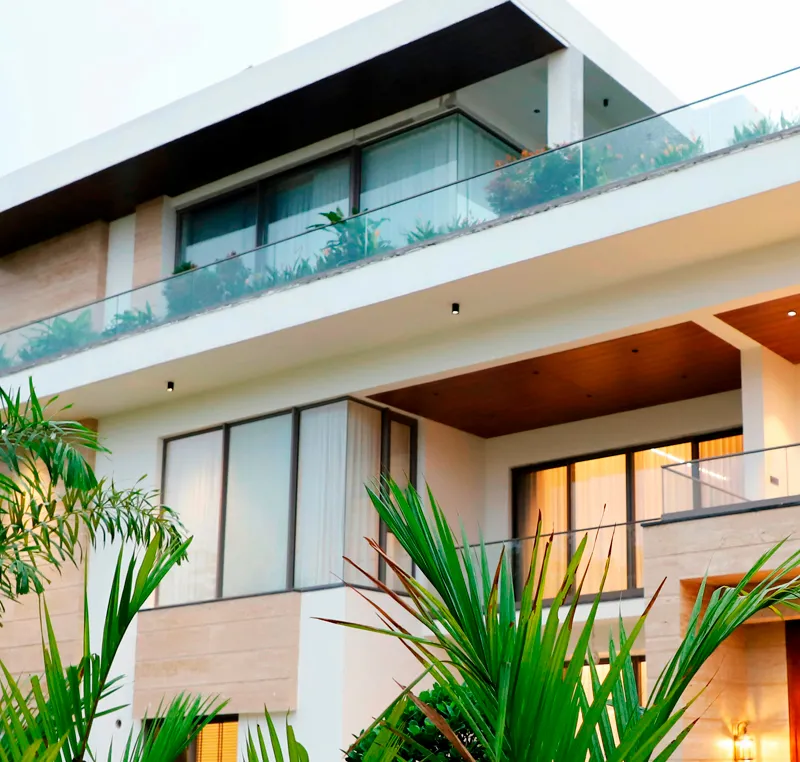
Housing Styles in Costa Rica
Costa Rica offers a wide variety of housing options to suit every lifestyle, budget, and preference. From spacious standalone houses to high-rise apartments, gated communities, rural farms, and cozy cabins, there is something for every expat who calls this country home.
What to Consider Before Choosing
- Location: Urban (GAM), coastal (Pacific/Caribbean), or rural highlands.
- Budget: Monthly rent or purchase price, plus HOA fees and property taxes.
- Residency status: Foreigners can own property freely in Costa Rica.
- Services: Water, electricity, internet quality varies by zone.
- Security: Gated options available in most areas for peace of mind.
Foreigners have the same property rights as Costa Rican nationals. There are no restrictions on foreign ownership, except in the Maritime Zone (first 50m from the shoreline), which is public domain.

Houses
Single-family homes are the most popular choice among expats who plan to stay long-term. Costa Rican houses are largely designed to maximize natural ventilation and connection with nature, featuring open layouts, large gardens, and ample natural light.
Key Characteristics
- Styles: Traditional single-story with gabled roofs, modern minimalist, and luxury tropical villas.
- Nature integration: Large windows, covered terraces, and tropical gardens are standard features.
- Sustainability: Many newer homes include solar panels, rainwater collection, and local materials.
- Services: Water, electricity and internet are reliable in GAM and main towns; less so in remote areas.
Costs
- Rent: $800–$1,500/month in suburbs of GAM; $1,500–$3,500/month in Escazú, Santa Ana, or coastal zones.
- Purchase: From $180,000 in inland towns to over $1M in premium coastal or urban areas.
Coastal areas (Guanacaste, Pacific coast) tend to have higher prices. Exploring inland towns can offer more affordable options while supporting local communities.
Legal Tip for Buyers
Always hire a Costa Rican attorney (notario público) to verify title, check for liens or debts, and register the purchase in the National Registry. Skipping due diligence is the most common and costly mistake expat buyers make.
Apartments
Apartments are the go-to option for expats arriving in Costa Rica for the first time, those working in urban centers, or retirees who prefer low maintenance living. Concentrated in the GAM, San José, Heredia, and the Pacific coast.
What You'll Find
- Studio / 1BR: Ideal for digital nomads and individuals. Most include furnished options.
- 2–3 BR apartments: Popular with families and couples. Many in buildings with pool, gym and parking.
- Penthouse / luxury: High-end buildings in Escazú and Curridabat, with panoramic views and 24/7 security.
Price Range (2025–2026)
- Studio / 1BR (Heredia, Curridabat): $550–$1,000/month
- 2BR apartment (Santa Ana, Lindora): $1,200–$1,700/month
- Premium condo (Escazú): $1,400–$2,500/month
- Pacific Coast (Tamarindo, Nosara): $1,200–$3,000/month
Most landlords require a 1-month deposit plus first month's rent. Ask about HOA (cuota de mantenimiento) before signing, it can add $100–$400/month on top of rent.

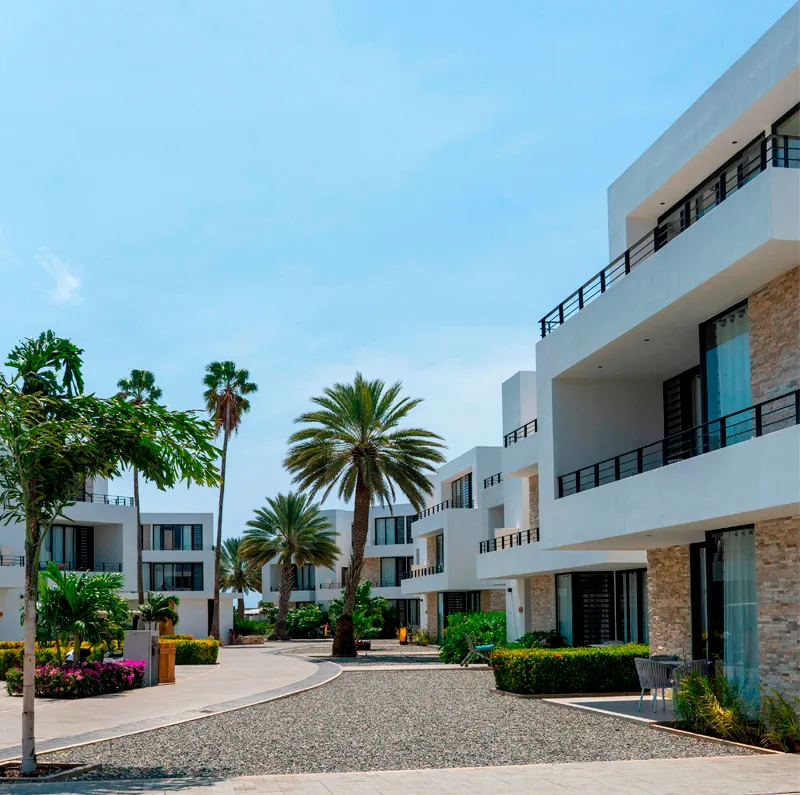
Gated Communities
Gated communities (condominios cerrados) are among the most sought-after options for expats who prioritize security, community, and shared amenities. They combine private homes or townhouses with controlled access, green spaces, and services.
What's Included
- 24/7 security: Controlled access, surveillance cameras, guardhouse.
- Common areas: Pool, gym, parks, playgrounds, sports courts.
- HOA (maintenance fee): Covers landscaping, cleaning, sometimes water and trash.
Popular Locations
- GAM: Escazú, Santa Ana, Lindora, Ciudad Cariari (Heredia), Tres Ríos (Cartago).
- Pacific Coast: Tamarindo, Playa Hermosa, Jacó, Manuel Antonio.
- Central Valley: Atenas, Grecia, San Ramón, increasingly popular with retirees.
HOA fees in premium gated communities can range from $200 to $800/month. Always request a copy of the condominium regulations (Reglamento de Condominio) before committing.
Farms & Cabins
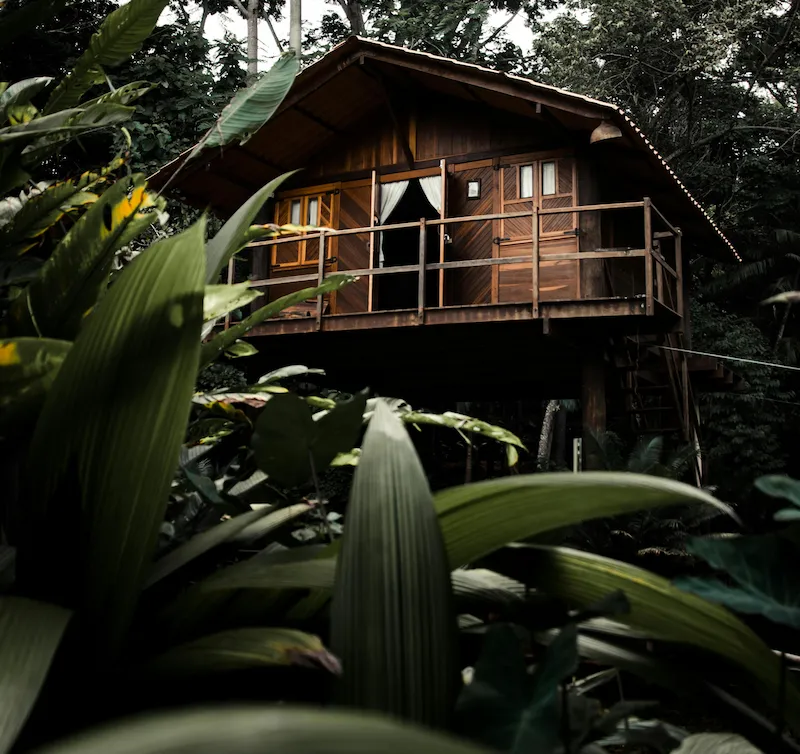
For those seeking a connection with nature, a slower pace of life, or agricultural projects, Costa Rica's farms (fincas) and cabins (cabinas) offer an authentic and affordable alternative to urban living.
Farms (Fincas)
- Popular zones: Central Valley (Cartago, Zarcero), Northern Zone (San Carlos, La Fortuna), South Pacific (Pérez Zeledón, Osa).
- Activities: Coffee, fruit, cattle, ecotourism, permaculture. Many expats combine residence with income-generating projects.
- Purchase: From $80,000 for small parcels to $500,000+ for productive large farms.
Cabins (Cabinas)
- Mountain zones: Monteverde, San Gerardo de Dota, Barva de Heredia, cool climate, excellent for long stays.
- Beach zones: Dominical, Uvita, Manzanillo, tropical, remote, with growing expat community.
- Styles: Rustic wood, modern eco-friendly, or luxury treehouse-style.
Before purchasing rural land, always verify access roads, water rights (concesión de agua), and environmental protection status with SETENA. Some rural land near rivers, forests or coastlines has construction restrictions.
Where to Find Your New Home
Costa Rica's geography creates very different living experiences depending on the region. Here are the most popular areas among the expat community.
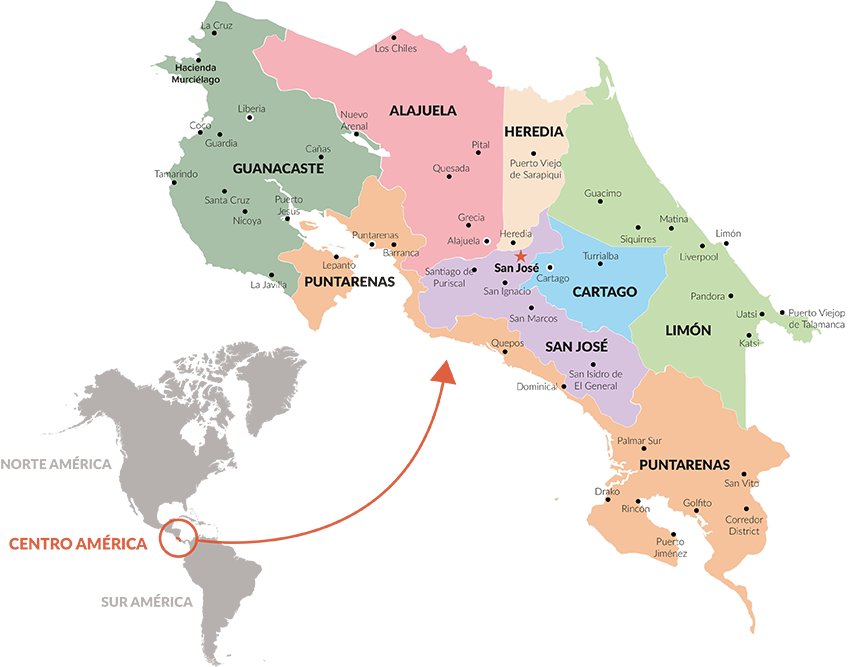
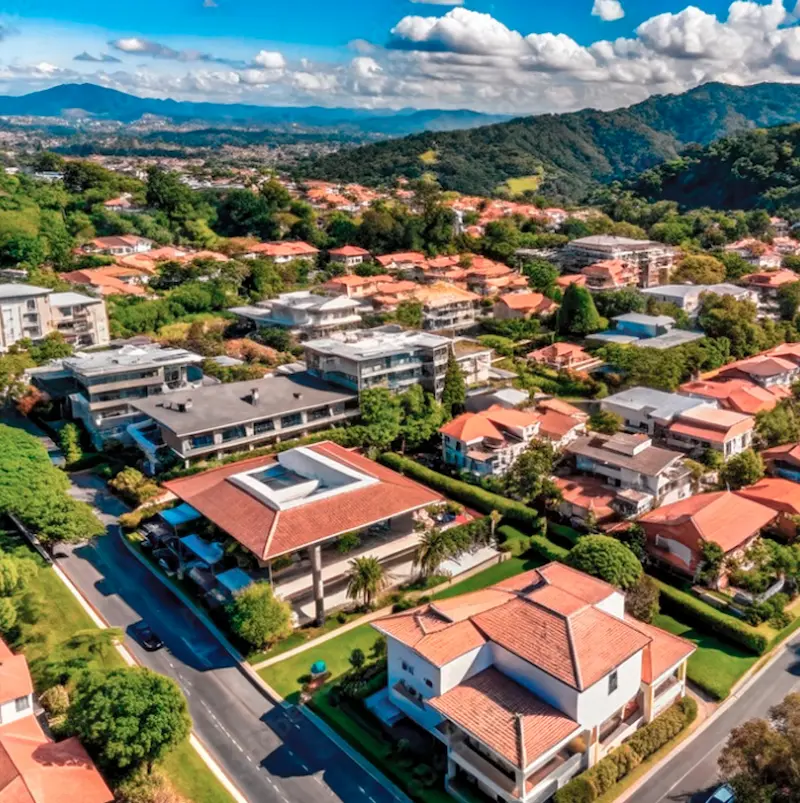
The Gran Área Metropolitana (GAM)
The GAM is home to over half of Costa Rica's population and concentrates the country's best infrastructure, healthcare, education, and services. It covers San José, Alajuela, Heredia, and Cartago provinces.
Top Expat Zones in the GAM
- Escazú: Most international zone, embassies, malls, private hospitals, international schools. Highest prices.
- Santa Ana / Lindora: Newer development, corporate parks, excellent quality of life. Popular with executives and families.
- Heredia / Ciudad Cariari: Good balance of cost and quality. Large expat community, green areas.
- Curridabat / Tres Ríos: Quieter, more affordable than Escazú, with good connectivity.
- Alajuela (near airport): Great choice for frequent travelers, lower costs, friendly local culture.
- Atenas, Grecia, San Ramón: Small towns with expat communities, lower cost of living, cooler climate.
The GAM has the best access to CAJA (CCSS) hospitals, private clinics, international schools, and fast internet, key factors for expats who want a comfortable, well-connected life.
Guanacaste, Pacific North
Guanacaste is the most popular province for beach-loving expats. With a dry tropical climate, stunning Pacific sunsets, and a growing expat infrastructure, it attracts retirees, remote workers, and investors alike.
Key Areas
- Tamarindo: Most international beach town. Full expat infrastructure, higher prices, lively social scene.
- Nosara / Sámara: Quieter, wellness-oriented communities. Growing yoga and digital nomad scene.
- Liberia surroundings / Nicoya inland: More affordable, authentic, and less touristy. Ideal for those avoiding gentrification pressure.
- Papagayo / Peninsula corridor: Ultra-luxury resorts and private residences. High-end investment properties.
Costs (2025–2026)
- Rent: $1,200–$3,000/month depending on proximity to beach.
- Purchase: $350,000–$1.8M+ (Tamarindo, Nosara, Playa Hermosa).
Beware of the Maritime Zone (Zona Marítimo Terrestre): the first 50 meters from the high-tide line are public domain; the next 150 meters are restricted concession zones. Foreigners cannot hold concessions individually, a Costa Rican corporation is required. Always verify zone status before buying coastal land.
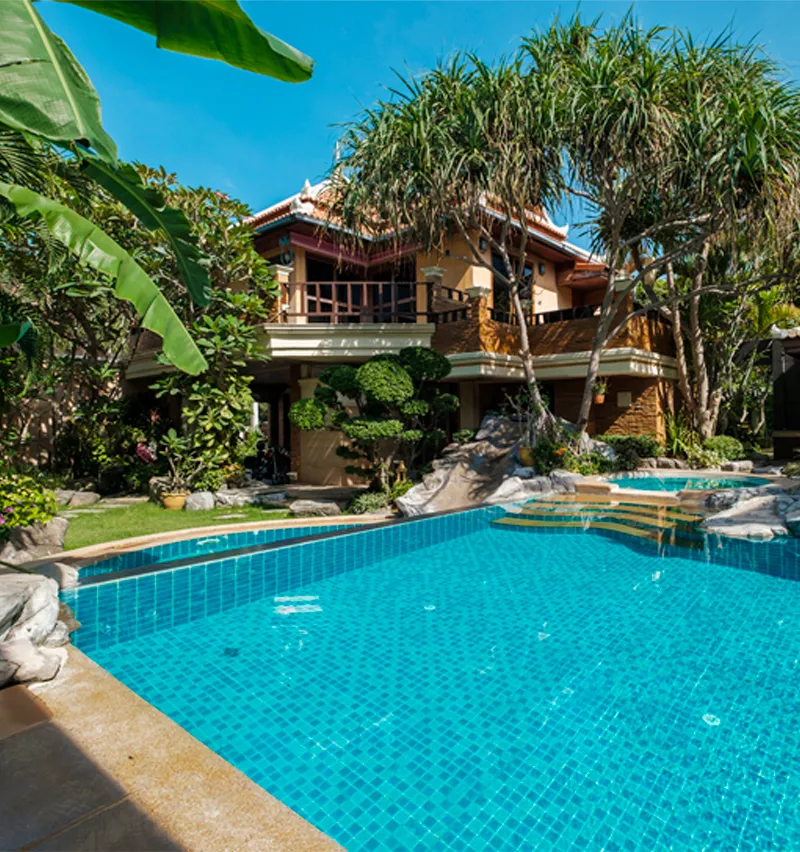

Puntarenas, Central & South Pacific
Puntarenas province spans the central and south Pacific coast, offering diverse living options from surf towns to remote jungle communities. It appeals to expats seeking a more authentic, less commercialized experience.
Key Areas
- Jacó: Closest beach to San José (1.5 hrs). Active nightlife, surf culture, growing real estate market.
- Manuel Antonio: National Park access, stunning biodiversity, popular with families and nature lovers.
- Dominical / Uvita: Southern Pacific gem, jungle, waterfalls, whale watching. Growing eco-expat community.
- Osa Peninsula: One of the most biodiverse places on Earth. For those seeking true remote living.
Infrastructure in the South Pacific is improving but still limited compared to the GAM. Internet, healthcare access, and road quality should be key factors in your decision, especially if you depend on reliable connectivity.
The Caribbean Coast, Limón Province
The Caribbean side of Costa Rica offers a completely different experience: Afro-Caribbean culture, lush rainforests, year-round warm weather with rain, and a laid-back rhythm of life that attracts a specific kind of expat.
Key Areas
- Puerto Viejo de Talamanca: Most popular expat hub on the Caribbean. Reggae, surf, jungle. Growing digital nomad presence.
- Cahuita: Small, quiet village with national park. Preferred by retirees seeking affordability and nature.
- Manzanillo: Remote and protected. Very limited infrastructure but extraordinary wildlife.
- Limón City: Provincial capital, main port. Commercial hub. Less popular with expats for residence.
Key Considerations
- Lower cost of living compared to Pacific coast, housing is significantly more affordable.
- Infrastructure gaps: Roads, hospital access, and internet quality lag behind the GAM and Pacific.
- Rainy season is year-round with less dry season than the Pacific, very important for property maintenance.
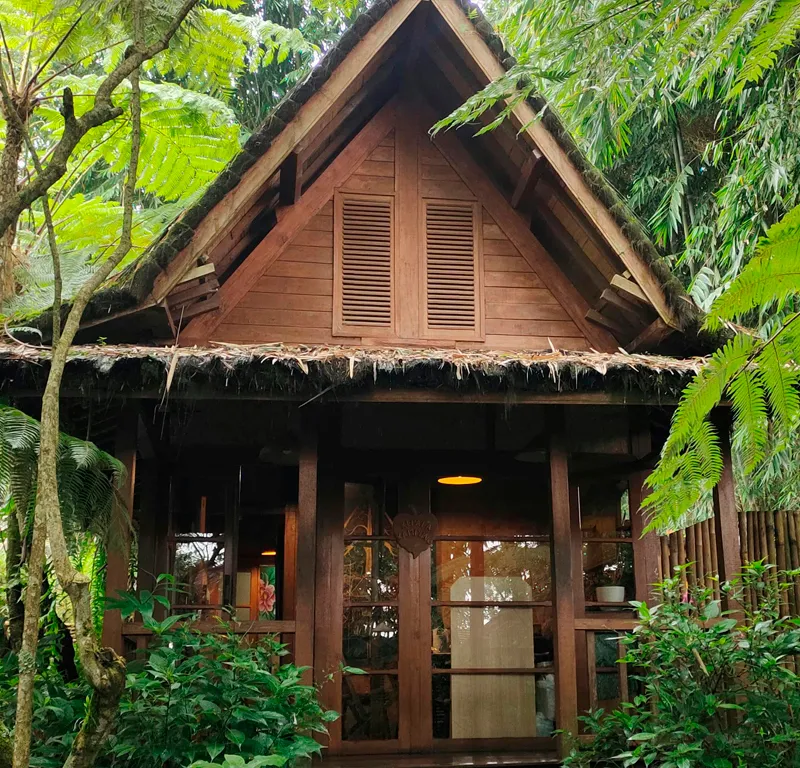

Rental Agreement
In Costa Rica, rental agreements are governed by the Urban Lease Law (Law N° 7527). This law applies equally to Costa Rican nationals and foreign residents.
Types of Contracts
- Fixed-Term: Minimum legal term of 3 years. After that, renewable annually. The landlord cannot terminate early without cause.
- Indefinite-Term: No set end date. Requires proper notice periods for termination.
What a Written Contract Must Include
- Full identification of both parties (landlord and tenant)
- Property description and address
- Rent amount, currency and payment method
- Security deposit (maximum 1 month's rent by law)
- Contract term, renewal and early termination clauses
- Signatures of both parties
Rights & Obligations for Tenants
- Right to a habitable, safe property in good condition.
- Right to privacy, landlord must give advance notice before entering.
- Obligation to pay rent on time and use the property as agreed.
- Deposit must be returned within 30 days of departure if no damages.
Verbal rental contracts ARE legally valid in Costa Rica but are highly discouraged. Without a written contract, disputes are very hard to resolve. Always request a written agreement.
Purchase Agreement
Buying real estate in Costa Rica requires a formal public deed (escritura pública) executed before a Costa Rican Notary Public and registered in the National Registry. Foreigners have the same rights as Costa Rican citizens to own property.
Essential Elements of the Purchase Agreement
- Identification of parties (buyer and seller)
- Property description (folio real number, location, boundaries, area)
- Sale price, currency, payment method and schedule
- Closing costs distribution: Transfer Tax (1.5%) typically split 50/50; Capital Gains Tax (15%); Notary fees (~1.25%); Registration costs.
- Free of liens clause: Property must be delivered free of mortgages, embargoes, or legal disputes.
Due Diligence Checklist
- Title review at the National Registry (Registro Nacional)
- Physical inspection by a qualified engineer or architect
- Permits verification with the municipality (municipalidad)
- Tax certificate from the municipality
- Environmental review if near rivers, coasts, or protected areas
Never buy property based solely on the seller's word. Hire an independent Costa Rican attorney (not one recommended by the seller or real estate agent). Title fraud and land disputes exist, due diligence is non-negotiable.


Solidarity Tax for Luxury Homes
The Solidarity Tax for the Strengthening of Housing Programs (Law N° 8683) is an annual tax that applies to homes valued above a threshold set by the government. It applies equally to Costa Rican nationals and foreigners.
Who Must Pay
Owners of homes valued over approximately ¢133,000,000 colones (~$270,000 USD at 2025 exchange rate). This includes primary residences, vacation homes, and rental properties.
Tax Rates (Progressive)
- ¢133M–¢265M: 0.25%
- ¢265M–¢397M: 0.30%
- ¢397M–¢530M: 0.35%
- ¢530M–¢795M: 0.40%
- Over ¢2,121M: 0.55%
When and How to Pay
Paid every January through the Ministry of Finance via the TICA system or national banking system. Owner declares property value; the Tax Administration can audit and adjust.
Failure to pay incurs a 10% monthly penalty plus moratorium interest. Properties held through corporations (S.A. or S.R.L.) are also subject to this tax. Consult a local tax accountant to confirm your obligation.